
A guide · Shoot the Dog, Volume Four
Adopting a nervous rescue dog: three families on the first months
Adoption profiles tend to describe a dog on its best day. Many rescue dogs arrive home on their worst: frightened of people, startled by noise, unsure whether this place is going to last.
If that is the dog in your house right now, it may help to hear from families who have been there. Here are three rescue dogs from Shoot the Dog, Volume Four, in the words their families printed on their pages.
Gigi: checking her new mum was still there
Gigi, a Staffy and Whippet mix, was found wandering the streets of Ballarat at about a year old, malnourished, injured and "terrified of both humans and dogs". She came through Homeless Hounds, and the meeting with her future mum was simple: "Gigi immediately walked over to her and leaned against her."
The early days were not easy. "At first, Gigi was quite nervous and confused, even a loud noise scared her." Then comes the line every new adopter should read:
Every morning she would wake up and stare at her new mum, just checking she was still there with her.
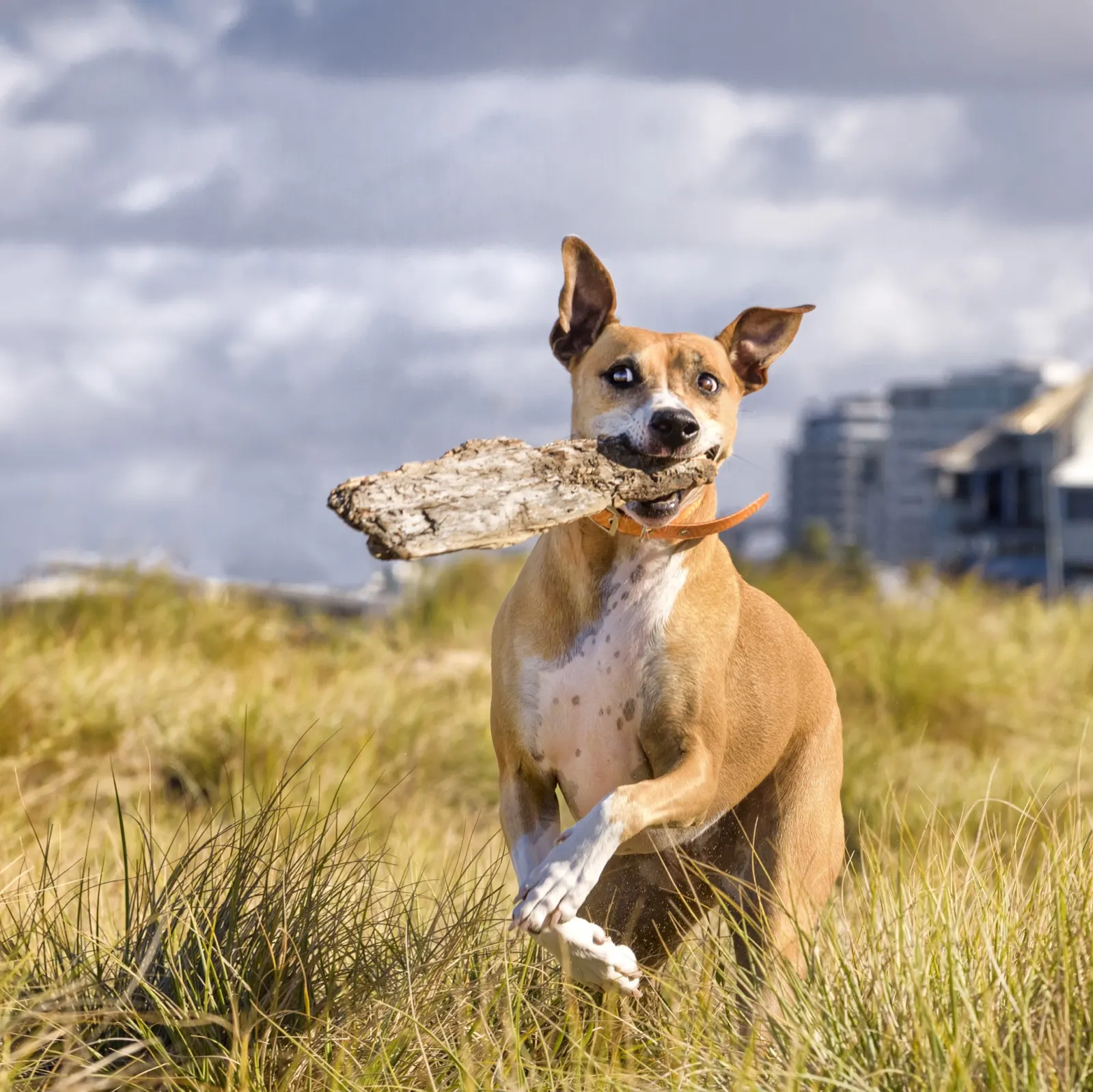
"Slowly she became more confident, learnt how to play and trust others." Four years on, her family call her "the happiest, most gorgeous dog". The photo above is Gigi on the dunes, carrying the biggest stick she could find.
Ripley: a year and a half
Ripley, a Kelpie cross Blue Heeler, came home at a year old, "scared and nervous of everyone and everything". Her page puts a time on the change:
After one and a half years of living in her furever home, it's hard to see any of that scared, nervous pup in her.
These days she "treats every game of fetch as if it's her last", howls with her humans and jumps for a ball "like a dolphin jumps out of water". She also has a daily Cuddle Quota, and will stand in your way until she reaches it.
Zeus: the lone wolf howl
Zeus, an Australian Cattle Dog cross Jack Russell, was picked up by SLK Cattledog Rescue. His family are honest about the start: "a troubled young puppy, full of energy and angst", and a trainer at obedience school "was not so sure" his issues could be overcome. He also had separation anxiety:
Sometime, when he thought no one was home, he would howl as a lone wolf might.
Zeus "was quick to learn from his new pack". Now he is "more self-assured", "attentive and loyal", and fond of conversations "with leaves, flies, birds, and sometimes inanimate objects".
What the three pages share
Read together, the pages suggest a few things worth holding on to:
1. It takes time, and the time is real. Ripley's family measured it in a year and a half. Gigi's in years. 2. Small signs count. A dog checking you are still there each morning is a dog deciding to trust you. 3. Get help when you need it. Zeus came through SLK Cattledog Rescue, and his obedience-school trainer "was not so sure"; he "was quick to learn from his new pack" anyway. Your rescue group is a good first call. 4. Write it down. Each of these pages holds a before and an after.
Where to read more
Shoot the Dog, Volume Four holds more than 250 dogs, many of them rescues, each with a portrait and a page from the people who know them best. Every family photographed paid a $100 participation fee, and all of it went directly to an animal rescue group. Where the $100 went names the five rescues.